

Tuesday 25 November 2025
Leiden, The Netherlands
12.30 – 18.00
The presentations from this event are now available using the links in the event program below.
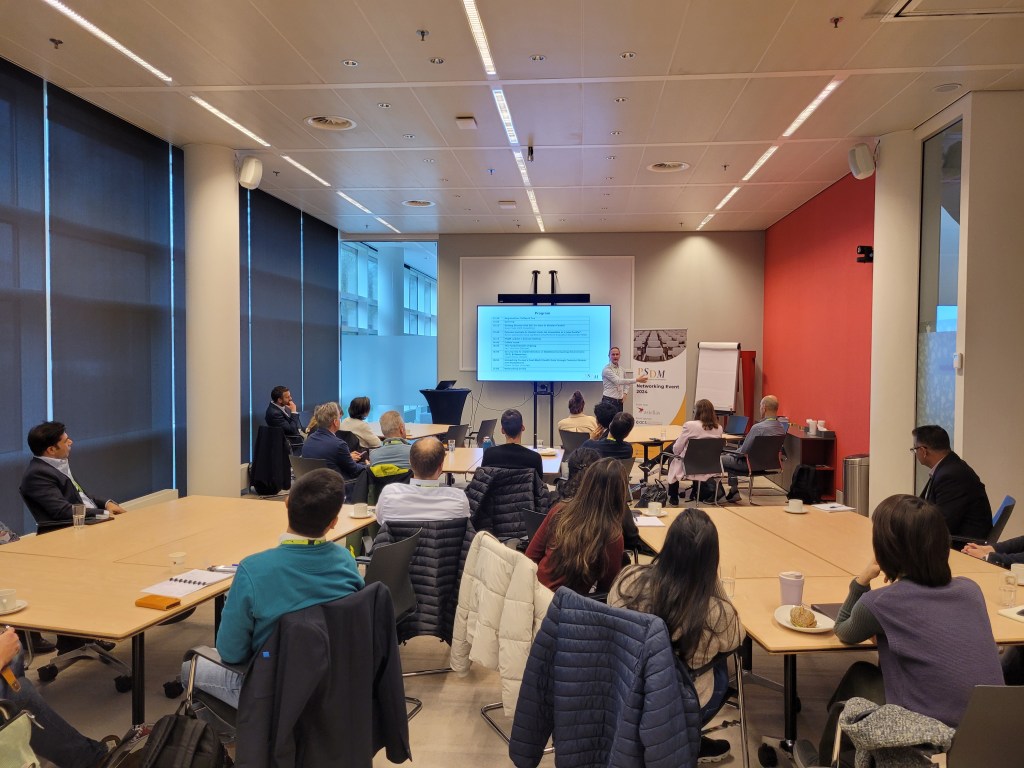
Program
| 12:30 – 13:00 | Walk-in with coffee, tea, and bites | |
| 13:00 – 13:15 | Opening / welcome | Jules van der Zalm, PSDM and OCS Life Sciences Jelle van Hasselt, CHDR |
| 13:15 – 13:45 | From paper to performance: The evolution of analytics and programming in phase I clinical trials | Jelle van Hasselt and Zubair Muhammad, CHDR |
| 13:45 – 14:15 | Current Statistical Methods for Implementing QTLs | Sonia Amodio, Merus |
| 14:15 – 14:45 | PSDM update / Annual meeting | Egbert Biesheuvel, PSDM and Viatris |
| 14:45 – 15:30 | Networking break | |
| 15:30 – 16:00 | Risk-based Quality Management in Clinical Data Management – the journey so far | Peter Stokman, Bayer |
| 16:00 – 16:30 | CDISC-Compliant ISS Submission: A Use Case | Lieke Gijsbers, OCS Life Sciences |
| 16:30 – 17:00 | From Solo to Sidekick: Using LLMs to Support SDTM Programming | Corine Baljé, Clin-Q |
| 17:00 – 17:15 | Closing remarks | Jules van der Zalm, PSDM and OCS Life Sciences |
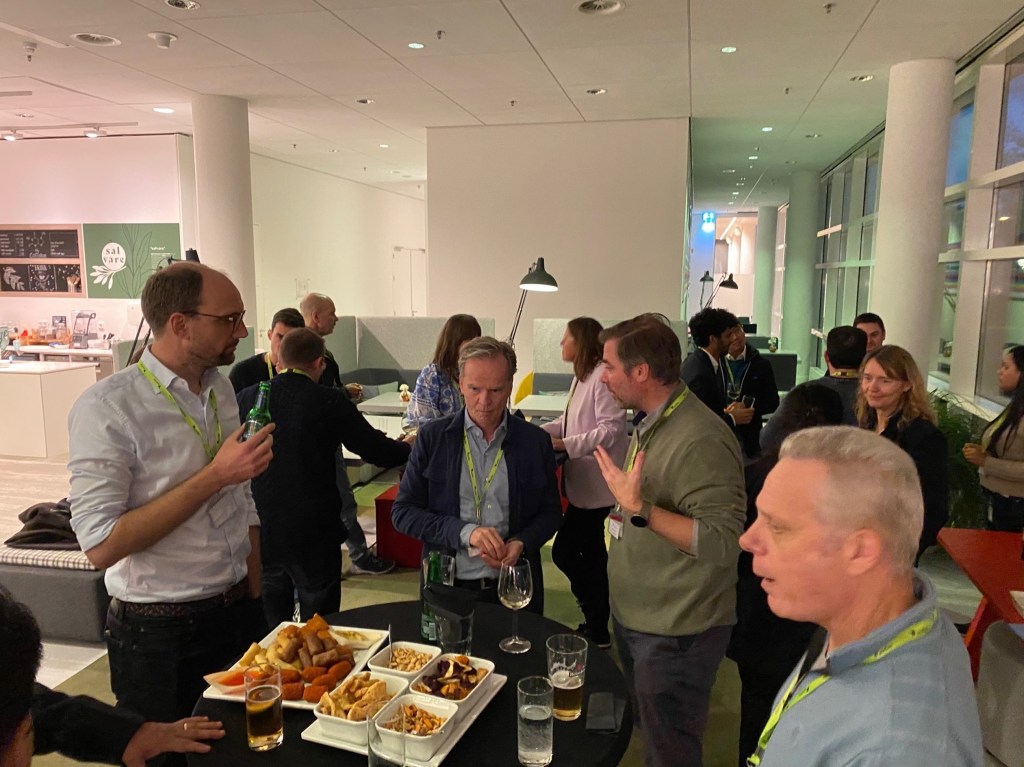
| 17:15 – 18:00 | Networking drinks |
Event sponsors

Abstracts
Jelle van Hasselt, CHDR
From paper to performance: The evolution of analytics and programming in phase I clinical trials
This presentation explores the transformation of data management, statistics, and clinical programming in Phase I clinical trials at CHDR. From manual, paper-based processes to fully digital, data-driven operations. It highlights key innovations, the challenges faced along the way, and how cross-functional collaboration has redefined the way early-phase studies are designed, analyzed, and reported. Finally, we’ll look ahead to the next frontier of automation, integration, and intelligent analytics shaping the future of early clinical development.
Sonia Amodio, Merus
Current Statistical Methods for Implementing QTLs
Implementing Quality Tolerance Limits (QTLs) in clinical trials is crucial for ensuring participant safety and trial reliability. QTLs identify systematic issues that could compromise these goals. This review examines current statistical methods used in the pharmaceutical industry for monitoring QTLs, emphasizing Risk-Based Quality Management (RBQM) and Quality by Design (QbD). It evaluates methods like Statistical Process Control (SPC) and Bayesian approaches, highlighting their applications in monitoring critical-to-quality factors. Simulations assess these methods’ performance in terms of Average Run Length (ARL), Alarm Rate (AR), and False Alarm Rate (FAR). Key findings indicate SPC methods perform better with larger sample sizes, while Bayesian methods are more effective at early detection of out-of-control processes. The review underscores the importance of early warning signals and proactive monitoring, providing practical recommendations for method selection based on trial characteristics.
Peter Stokman, Bayer
Risk-based Quality Management in Clinical Data Management – the journey so far
Based on regulatory guidance, over the last decade, within Bayer clinical development processes & tools were created to focus on what matters most. This implies that there is a focus on the critical data, and a centralized monitoring process was developed to analyse operational data: what is happening in ongoing studies, particularly with respect to the most critical data and processes. This allows the organization to continuously steer & adapt to optimize the data quality. This presentation describes how Bayer has been responding & anticipating on evolving regulatory demands.
Lieke Gijsbers, OCS Life Sciences
CDISC-Compliant ISS Submission: A Use Case
The integrated summary of safety (ISS) is a critical component of a submission to the FDA regulatory authority. For the ISS, data from different studies are pooled and harmonised to conduct the integrated analyses. Based on a use case, we’ll explain in this presentation the approach we took to create CDISC compliant integrated datasets. Furthermore, we’ll share our experiences regarding the creation of an SDTM and ADaM Define-XML for integrated datasets as well as the icSDRG and the iADRG.
Corine Baljé, Clin-Q
From Solo to Sidekick: Using LLMs to Support SDTM Programming
This session shares insights from a pilot project exploring how Large Language Models (LLMs), like ChatGPT, can act as supportive sidekicks in generating SAS programs for SDTM datasets. By moving from solo coding to AI-assisted programming, we aim to enhance efficiency, consistency, and programmer experience in clinical data workflows.
Venue
CHDR
Zernikedreef 8
2333 CL Leiden
The Netherlands
Further information
We recommend to travel by public transport. If you travel by car, use one of the paid parking garages in the vicinity of CHDR, such as the “LUMC parkeergarage Leiden”.
Further practical information, logistics, and travel instructions will follow later.
 Pharmaceutical Statistics and Data Management